
To Carry the Scars Lightly
Some wounds cannot be wholly cured (and yet they are not fatal)


I’ve been making paper lately.
The inspiration was as impulsive as a two-week project ever can be, born from a desire to have a hefty amount of non-printer-paper for a different impulsive art project—and yes, there’s a pattern here.
But the inspiration was also heavily tied to a desperate attempt to keep myself sane in February. Between tutorials on paper-making, I posted this note:
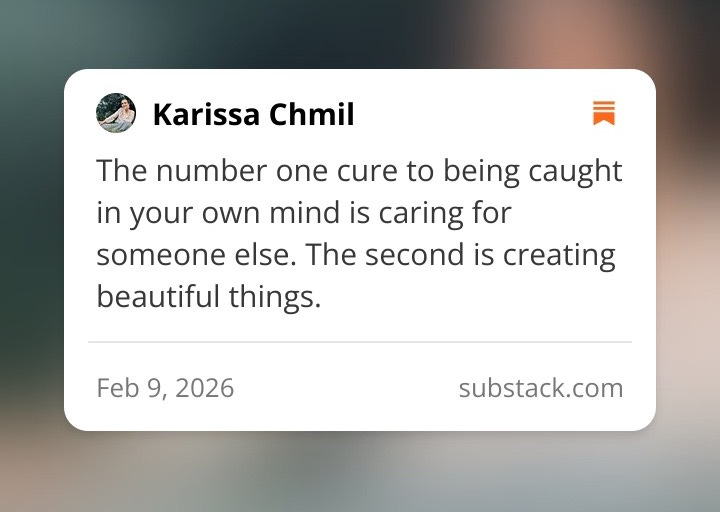
And it was that motivation that found me studiously shredding old envelopes, experimental1 sketchbook pages, school notes, and other odds and ends for several successive evenings.
Other steps in pre-paper-making involved:
Stabbing myself with screen, repeatedly
Wandering through the dark looking for straight-enough sticks, accompanied by a bewildered cat
Accidentally tricking my brother into thinking I was making blueberry smoothies
But at last, all the pieces were in place, and I could begin.
If you’ve never made paper before, it involves (at least by the technique that I used) a large vat of water, handfuls of paper fibers, and a mould and deckle.2 You spread the fiber through the water bit by bit, dip the mould and deckle in, transfer it to cloth, sponge out excess water, and leave it to dry.
It’s marvelous. And it takes a really long time.
At first, I attempted responsibility and listened to a school lecture as I worked. But after discovering that taking notes is very hard when your hands are submerged in water, I threw responsibility to the winds and turned on an audiobook.
Rosemary Sutcliff is one of those names that I’ve heard thrown around for years without ever seriously investigating. I had the vague impression that she’d written a lot of books, and that she’d been influential on other people I respect.
A pair of friends assured me that The Eagle of the Ninth would be a good place to start, so I checked out the audiobook, spent a few minutes staring at the cover and trying to figure out if this had any connection to Gladiator (it does not), and began.
Y’all—it’s a good book.
Another author I enjoy, Megan Whalen Turner, has spoken repeatedly about this book. And more often than not, she frames it, not as a story, but as a question.
Who can be at the heart of an adventure story? Are there things that disqualify someone from being the hero?
Eagle of the Ninth is intricately connected to those questions. It centers around Marcus, a nineteen-year-old Roman centurion, brimming with hope and ambition as he takes his first command at a post in second-century Britain.
And then, in his very first battle less than a year into his first command, Marcus is wounded. His right thigh-bone is shattered—and with that, his career in the military is over. He no longer has the physical capacity to meet the standards set by the Roman army—simple as that. Someone else takes his command, and he goes to live with an uncle he’s never met.
This all happens in the first forty-five minutes of the book.
Marcus is still young. He still has ambition. He still wants to do things—but can he? Will he? What does a wound like this mean in a person’s life?
An author’s personal life, I believe, throws great light on the works they produce. And Rosemary Sutcliff is no exception to that rule.
Particularly noteworthy for this book is the fact that Sutcliff was diagnosed with juvenile idiopathic arthritis at a very young age, and that she spent most of her life in a wheelchair. She had, from all accounts, dreams and ambitions that went unrealized—simply because she was physically incapable of doing them.
It’s the kind of chronic disease that takes a lifelong toll. And yet Sutcliff was young when it set in, and she lived over seventy years.
So you have to ask yourself—and I’m sure she did—what do you do with the broken pieces?
There are many lines in Eagle of the Ninth that we could talk about, but the one that really made me look up from my wet paper comes towards the very end.
Marcus and his friend Esca, a former gladiator and Briton, have returned home from their quest to Marcus’ uncle. Before they left for the quest, Marcus formally freed Esca, but almost all of Esca’s time in this house is still associated with slavery. As the book puts it:
You could give a slave his freedom, but nothing could undo the fact that he had been a slave; and between him, a freed-man, and any free man who had never been unfree, there would still be a difference. Wherever the Roman way of life held good, there would still be a difference.
Esca was born free, a spear-bearer for his father in the wilds of Britain. Slavery was his own form of injury, as Marcus’ was a shattered thigh-bone.
Marcus’ uncle summons the two of them to his study, to give a report of their quest and what they accomplished. Marcus is beginning the climb when he realizes that Esca is still standing at the foot of the stair.
“I think that I will not come,” Esca said. “I think that I should not go to your uncle’s private sanctum. I have been a slave in his house.”
“You are not a slave now.”
“No. I am your freed-man now.”
On a sudden impulse, Marus reached out and caught his friend’s shoulder, not at all gently. “Listen to me,” he said. “You don’t like being a freed-man, do you? Well, I don’t like being lame. That makes two of us. And the only thing we can do about it, you and I, is to learn to carry the scars lightly. Come up with me now, Esca.”
Esca did not answer for a moment.
“I will come,” he said.3
There are some who would say that Marcus should have held his tongue here. Esca feels uncomfortable. This house was not a kind place to him—kind as far as slavery goes, but still a place of humiliation. He should have prerogative over how he acts and to what extent he engages with this atmosphere that once enslaved him.
But Marcus—his friend—won't allow that.
That makes two of us, he says. We both have things that we hate but have to live with. Running away from them or letting them play the trump card isn’t an option.
We must learn to carry the scars lightly—to carry them, yes, but not to give them more importance than they deserve.
That balance, I think, takes a lifetime to learn—not avoiding our pain, but also not allowing it to consume us. Taking the time to grieve when we must, but carrying on and holding our head up through all the years that follow.
There’s a haunting line in The Return of the King—made more haunting by its framework of eucatastrophe and euphoria on behalf of so many other characters—that says: there are some wounds that cannot be wholly cured.4
For Marcus, it’s a physical injury. For Esca, it’s a social cost. For Cottia (the red-headed girl next-door who showcases more personality in three lines of dialogue than some real people do in three months), it’s the loss of home and heritage.
Each of those wounds had severe, life-altering effects. There is no way to undo them, to restore Esca to his dead father and Marcus to full health and strength. And even when people encourage us to “focus on the present” and keep from “getting lost in what happened”—there are times when what happened is strong enough that it never stops happening.
Its change on the story is unalterable, irrevocable. When your thigh-bone is shattered, you will not lead a Roman century again. When your village is burned, you will not return to a free and happy childhood. When your loved one dies, they stay dead.
Some wounds cannot be wholly cured.
The only thing we can do about it, you and I, is to learn to carry the scars lightly.
Some of my favorite fictional characters are those that have been hurt, and badly—but that don’t flinch away from any of life. They welcome all of its joys and griefs with open hands and let themselves feel them.
They carry their scars lightly.
They may be frightened, but they’ll go about their work frightened if they must. They may be tired, but they get up when it’s light out and smile at their neighbors.
I want to be brave like that—to be hurt, as we all are, but to be still here, still alive, and to know it—and act like it.
I want to carry my scars lightly.
You are alive as you read this! I think you’ve forgotten how glorious that is.
Yes, you have lost things. Yes, you have been hurt by things. Yes, there are scars that you and I must carry (must, yes, grief is work and some of the hardest work there is).
But you are alive. This is not the end of your story. There are quests and friendships and bright-hard things to do yet.
Some wounds cannot be wholly cured—but neither are they fatal. You are here, and I am here, and sometimes it hurts so much we wish we weren’t. But you are alive. There is more to this tale yet to come.
All we can do, you and I, is learn to carry the scars lightly.
Enjoyments here and there:
Read-alouds: I’ve been reading Railway Children to a group of elementary kids, and it’s been great fun. They’re tracking with the classic tone pretty well (with a few vocabulary discussions here and there), and the dynamic between the three siblings is fantastic.
Habits: Long-hand note-taking, recipe-copying, book-tracking, you name it. A fountain pen makes mundane tasks so much more enjoyable, and lately I’ve been coveting all excuses to stay off screens.
Paintings: “Living in the Meanwhile,” by Lilias Trotter. Look it up.
Substack: My dear friend Lilian Rose recently started her own Substack, and I’m enchantedly happy. Do yourself a favor and go read some of it.
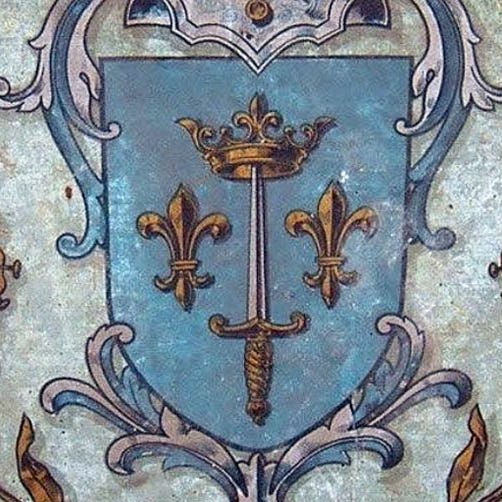
Sometimes the process is more important than the product, and that’s 100% fine. I shan’t go on an AI rant, but suffice it say, I think chronic AI-users forget this, to personal and societal detriment.
This is where the sticks come in. (Anything that says “DIY” and then starts “go to the store and buy X” is false advertising. I’m still salty about this.)
Sutcliff, The Eagle of the Ninth
Tolkien, The Return of the King
*speechless but felt this very, very deeply*
This was beautiful as always, Karissa. ❤️